
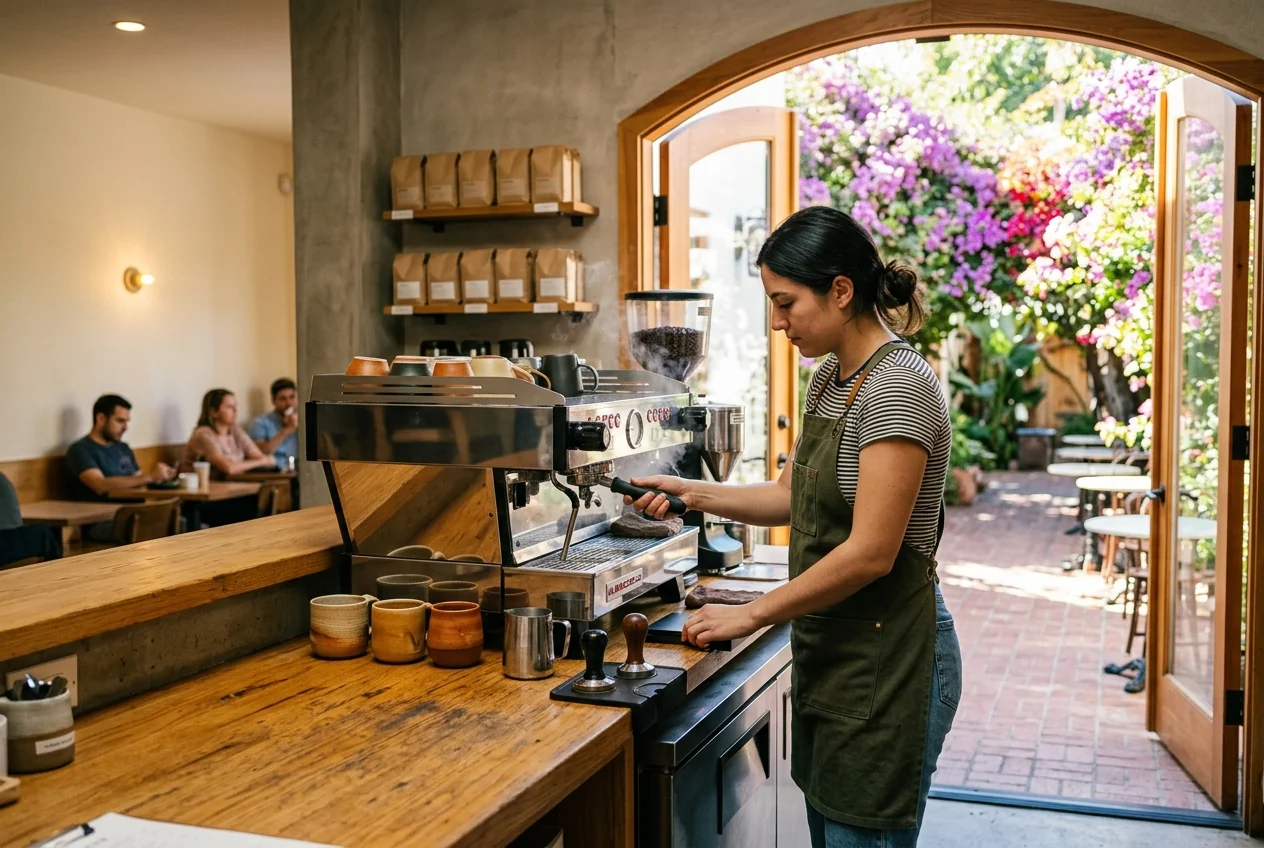
An espresso bar selling packaged pastries, a café preparing hot food and a roastery shipping its own beans can all be called a coffee shop. For insurance, those differences matter. Describe your actual menu, preparation methods, seating and sales channels rather than relying on the label alone.
From our Carlsbad office, Insurance Steel Brokers helps café owners across San Diego County discuss coverage around their operations. The questions below complement the broader restaurant guide; they are not a promise that a particular policy or endorsement is available.
Separate refrigeration, spoilage and interruption.
Milk, prepared foods and other temperature-sensitive stock create a different concern from physical damage to the refrigerator itself. Ask what event must occur for spoilage coverage to apply, whether a utility interruption is addressed and what deductibles or sublimits apply.
If a key espresso machine is unavailable, ask how the policy would treat the interruption. Business income protection does not cover every loss of sales; covered causes, waiting periods and policy conditions matter. Keep equipment values and realistic continuing expenses available for the review.
Consider the counter, seating and employee duties.
Hot drinks, customer traffic, outdoor seating and cleanup can raise liability questions. Staff may also prepare food, unload stock, clean equipment or deliver orders. Describe all duties and payroll rather than assuming every employee has the same role.
General liability and workers’ compensation serve different purposes. Review landlord or event-organizer requirements separately, including any requested additional insured terms, and avoid assuming a certificate creates coverage that the policy does not contain.
Mention catering, deliveries and packaged products.
Office coffee deliveries, pop-up events and wholesale beans can extend the business beyond its main premises. Explain who drives, whose vehicles are used and whether products are sold under your brand. Discuss product liability, transport and vehicle exposures as appropriate to those activities.
Do not assume an outside delivery platform or event host covers all of your responsibilities. Share the relevant agreements, and seek legal advice where contract interpretation is needed. A change in service should be discussed before treating it as covered.
Keep permit and insurance reviews separate.
San Diego County DEHQ states that a person operating a retail food facility must obtain a valid public health permit. Its Food Program links to current food-facility, inspection and plan-check guidance. Confirm requirements for your location and any ownership, construction or operational change with the responsible authorities.
A permit or inspection grade does not establish insurance coverage. For a quote, gather the menu and cooking details, annual sales, payroll, equipment values, lease requirements and current policies. The downloadable restaurant checklist provides a practical starting point without replacing the insurer’s application.
The takeaway
Explain how the café earns revenue and what it depends on. Clarify equipment, stock, interruption and off-site activities before comparing price alone.
Discuss your coverage needs