
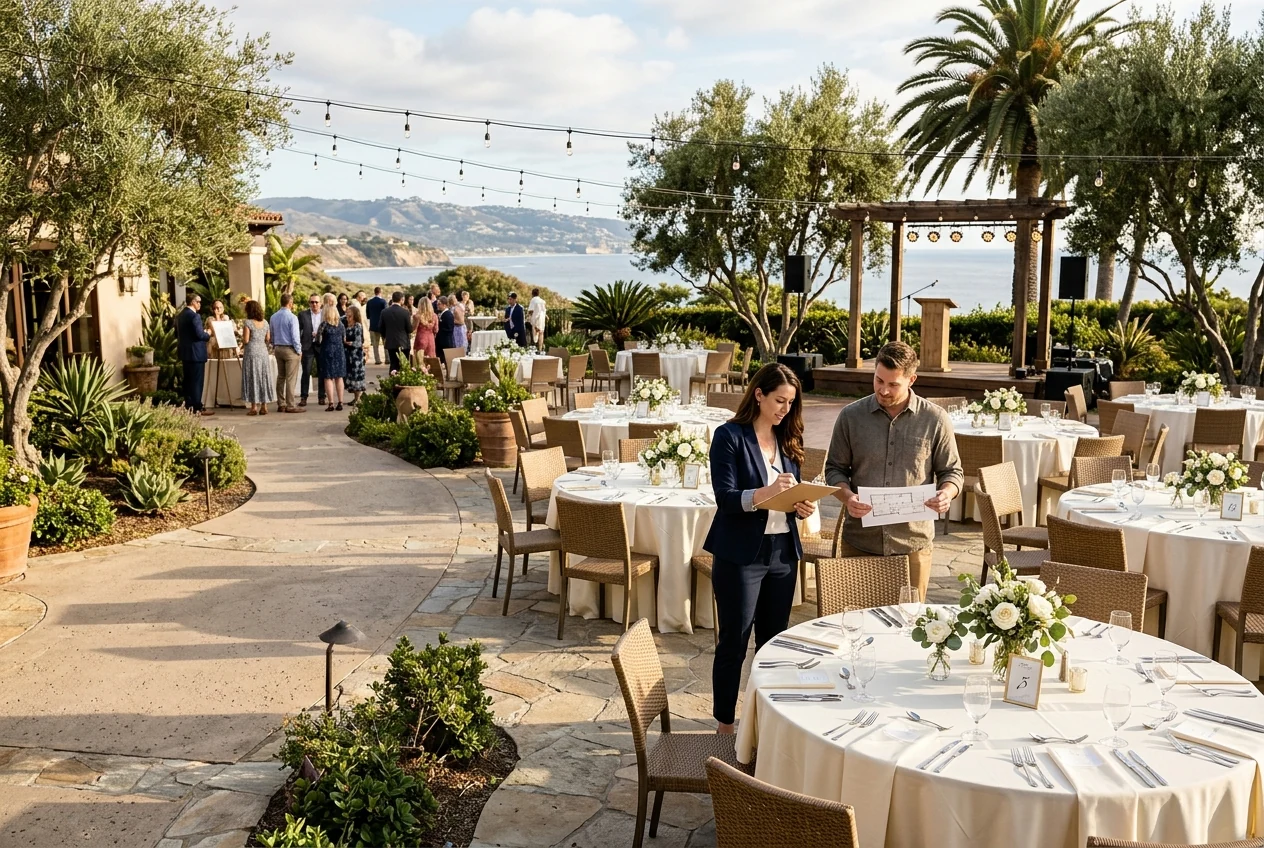
Special event insurance can help protect a host or organizer against covered claims arising from an event. It matters because hiring a venue and insured vendors does not automatically insure your own responsibilities. A guest injury or an allegation involving alcohol may reach beyond the event budget to the person or organization hosting it.
Whether you are planning a wedding in Carlsbad, a North County San Diego fundraiser or a conference elsewhere in California, start with who is responsible for what. This guide is for consumers and professional event planners; it explains questions to ask rather than promising that a particular incident will be covered.
Insurance Steel Brokers reviews one-day, multi-day and annual event options, all subject to underwriting. Options for up to 20,000 attendees per day, alcohol liability for up to 20,000 alcohol consumers per day and more than 100 event classes are also subject to underwriting. Capacity does not equal automatic acceptance or a dollar limit of insurance.
1. A short event can create a long-lasting claim.
Imagine a guest trips over a temporary cable and alleges the organizer failed to keep a walkway safe. Or rented venue flooring is damaged during setup. Even before responsibility is established, responding to a claim can take time and money. Event liability may address covered third-party injury or property-damage claims and associated defense, depending on the policy.
These are illustrations, not actual agency claims or coverage determinations. Damage to rented property, participant injuries and allegations involving contractors can have different exclusions or sublimits. Ask how the proposed policy treats the activities you actually plan.
2. The venue’s insurance is not automatically yours.
A venue carries insurance for its own interests and operations. Its policy may not protect you as the event organizer. The rental agreement may require your own liability policy, specified limits, additional insured status and evidence of coverage before you can access the space.
Send the insurance requirements to your broker early. A certificate of insurance summarizes evidence of coverage; it does not itself add an insured or override the policy. Confirm the exact legal names, dates, locations and required endorsements. Contract interpretation or enforceability questions belong with your legal adviser.
- Who must be the named insured: the couple, company, nonprofit or another legal entity?
- Which venue, owner or other party needs an additional insured endorsement?
- Do the approved dates include setup, rehearsals, deliveries and teardown?
- Are the requested limits and endorsements actually included, rather than only requested?
3. Alcohol deserves a separate coverage question.
An open bar, drinks included in a ticket price, a cash bar and a commercial tasting event are not the same underwriting situation. Explain who provides, sells and serves the alcohol, expected consumers per day, age controls and security arrangements. Do not assume that using a licensed venue or bartender eliminates your exposure.
Host liquor liability and liquor liability are different concepts; the applicable form depends on the insured’s activities and policy language. Commercial sellers or servers should not assume host liquor is sufficient. Ask about alcohol exclusions, assault-and-battery restrictions and whether the host, organizer and service provider each have suitable protection. Insurance does not replace permits or responsible service practices.
4. Liability and cancellation solve different problems.
Liability coverage concerns covered claims by other people. Cancellation or postponement protection concerns specified financial losses when an event cannot proceed because of a covered cause. Buying one does not automatically buy the other. This distinction is central to the NAIC’s consumer guidance on event insurance.
If your concern is nonrefundable deposits, weather, illness or a vendor failure, raise it separately. Availability, timing requirements, covered causes and exclusions vary. A known threat, poor ticket sales, voluntary cancellation or simply changing your mind should not be assumed covered. There is no promise that every reason for cancellation is insurable.
5. Planners and vendors have their own responsibilities.
A professional event planner may need ongoing business liability and professional liability for allegations about advice, coordination or mistakes in services. An event host’s policy is not a substitute for reviewing the planner’s own business. Workers, vehicles and rented equipment may need separate policies too.
Keep a vendor list and discuss the responsibilities in each agreement. Caterers, bartenders, entertainers, security providers and rental companies do not necessarily share the same insurance needs. Ask for appropriate evidence and endorsements, but do not treat a folder of certificates as proof that every gap is closed.
6. Build the review around your California venue.
A coastal outdoor reception, an inland summer festival and an indoor conference have different weather, crowd and property considerations. North County and San Diego County events may involve private-property agreements, city or county permits and food or alcohol requirements. Check with the actual venue and responsible authorities; there is no single insurance rule for every California event.
Tell your broker about temporary structures, sporting participation, animals, rides, pyrotechnics or other unusual activities before booking them. An event name on an eligibility list does not establish coverage for every attraction within it. Plans can change; tell the insurer or broker about material changes before relying on the original approval.
7. Start before the certificate deadline.
Begin the insurance review when you are considering contracts and deposits, not when the venue asks for a last-minute certificate. Underwriting, endorsements and any cancellation coverage can have separate timing requirements. No same-day issuance or acceptance is guaranteed.
Use the same operating details for every proposal, compare exclusions and limits as well as price, and obtain written confirmation of coverage and its effective dates before relying on it. A quote request or payment alone does not establish coverage.
- Organizer’s legal name, role, contact details and prior event or claim history
- Venue addresses and the full event, setup and teardown schedule
- Attendees per day, participant ages, entertainment and special activities
- Alcohol service, sales arrangements and consumers per day
- Venue/vendor contracts, requested limits and additional insured details
- Rented property, staff, vehicles and separate planner business exposures
- Deposits or cancellation concerns you want separately reviewed
The takeaway
Insure the responsibilities you actually have—not just the certificate a venue requests. Explain the event, clarify alcohol and cancellation separately, and confirm the approved terms before guests arrive.
Discuss your coverage needs