
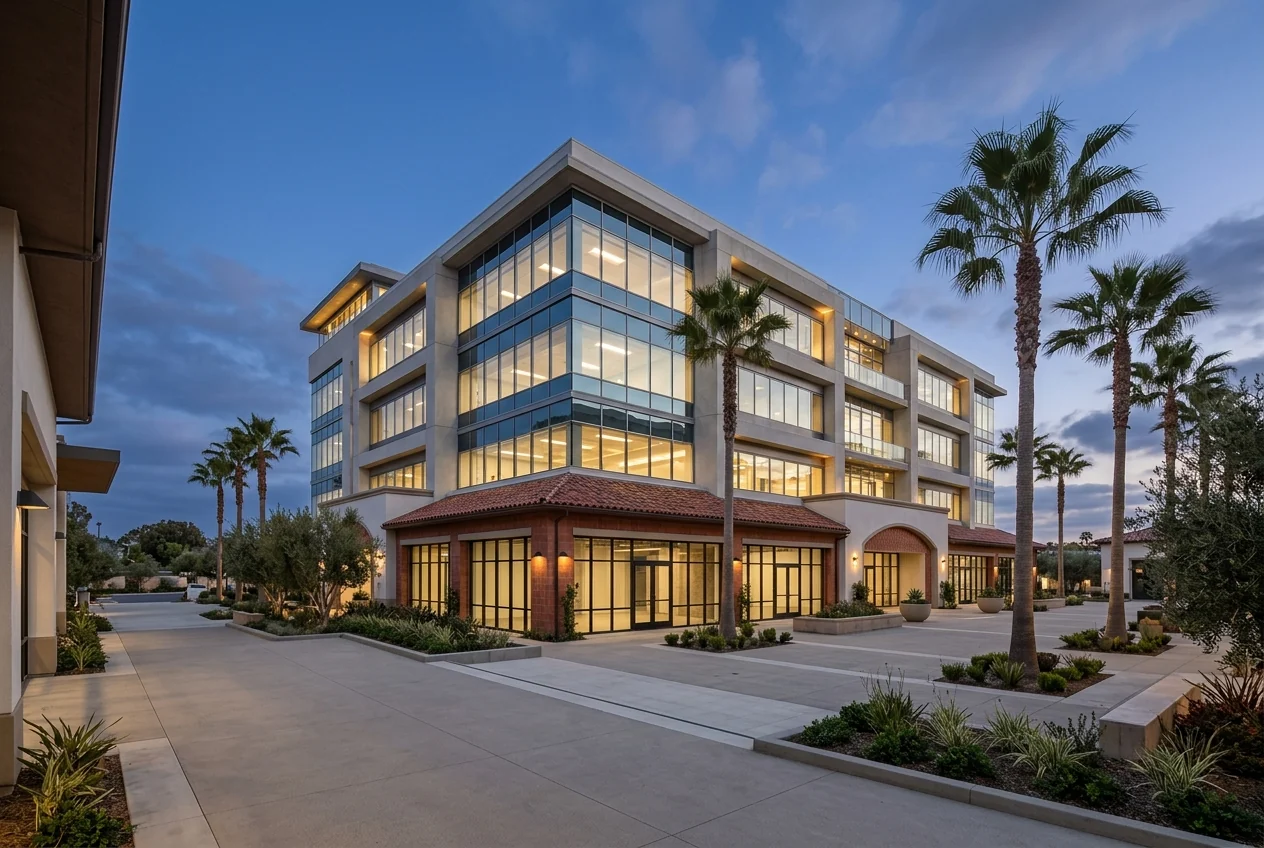
A commercial owner/lessor review should identify who owns the building, what each tenant does, how much space is occupied and who insures each exposure. Rental income and premises liability need attention alongside the building value. A tenant’s certificate is not a substitute for the owner’s insurance review.
This checklist is for commercial properties such as industrial, office, retail or restaurant premises. It is not a residential landlord guide. A Carlsbad industrial unit or San Diego restaurant building can raise different questions from a home rented to a household.
Keep a current tenant and occupancy schedule.
List the legal tenant names, operations, square footage, shared areas and responsibility for protection systems. Cooking, fabrication, chemical storage, warehousing and office use should be described accurately rather than grouped as generic commercial activity.
Explain vacant space, when it became vacant, construction work and proposed changes in use. Policy definitions of vacancy or unoccupancy and their consequences vary. Do not assume the same terms remain available after a tenant leaves or a substantially different operation moves in.
Separate ownership and valuation questions.
Identify buildings, improvements, fixtures, equipment and property owned by others. Ask which items are included in the building definition and which need separate limits. Market price and land value do not determine the reconstruction cost of a commercial building.
Review replacement-cost or actual-cash-value terms, insurance-to-value requirements, deductibles and ordinance-or-law options. Tenant improvements may create responsibility questions under the lease. Discuss those facts rather than assuming a lease label such as triple net resolves every insurance issue.
Review the lease and rent exposure together.
Bring the actual insurance provisions of leases, lender requirements and property-management agreements. Additional insured requests, limits, waiver language and responsibility for repairs should be matched to the proposed policies. Have a qualified legal adviser interpret contractual obligations.
For rental income, provide current rents, lease terms, continuing expenses and a realistic recovery period. Ask what covered loss must occur, how waiting periods apply and when coverage ends. Tenant default, market vacancy or a reduction in demand is not automatically covered rental-income loss.
Hypothetical example: an office tenant becomes a restaurant.
Suppose space previously used as an office is being leased to a restaurant. Cooking, suppression systems, equipment, occupancy and lease responsibilities may all change. The owner should discuss the proposed operation before assuming the existing insurance remains appropriate.
This example is not an acceptance promise. An insurer may request new details or different terms. Retain the tenant’s insurance evidence, but confirm the owner’s own policy arrangements independently and obtain written confirmation before relying on changes.
A practical review checklist
Use this list to organize a conversation, not as a substitute for an application or a policy review. Ask how to share supporting documents securely; do not include employee identifiers or other sensitive information in a public URL.
- Ownership entities, addresses and management agreements
- Tenant operations, occupied square footage and vacancy dates
- Building systems, protection, roof and renovation information
- Reconstruction values, improvements and property ownership
- Leases, lender requirements and tenant insurance evidence
- Rental income, continuing expenses, current policies and loss history
The takeaway
Use the commercial-owner page to start a contextual inquiry. A clear tenant schedule and the actual leases are more useful than a generic request to insure a building.
Discuss your coverage needs