
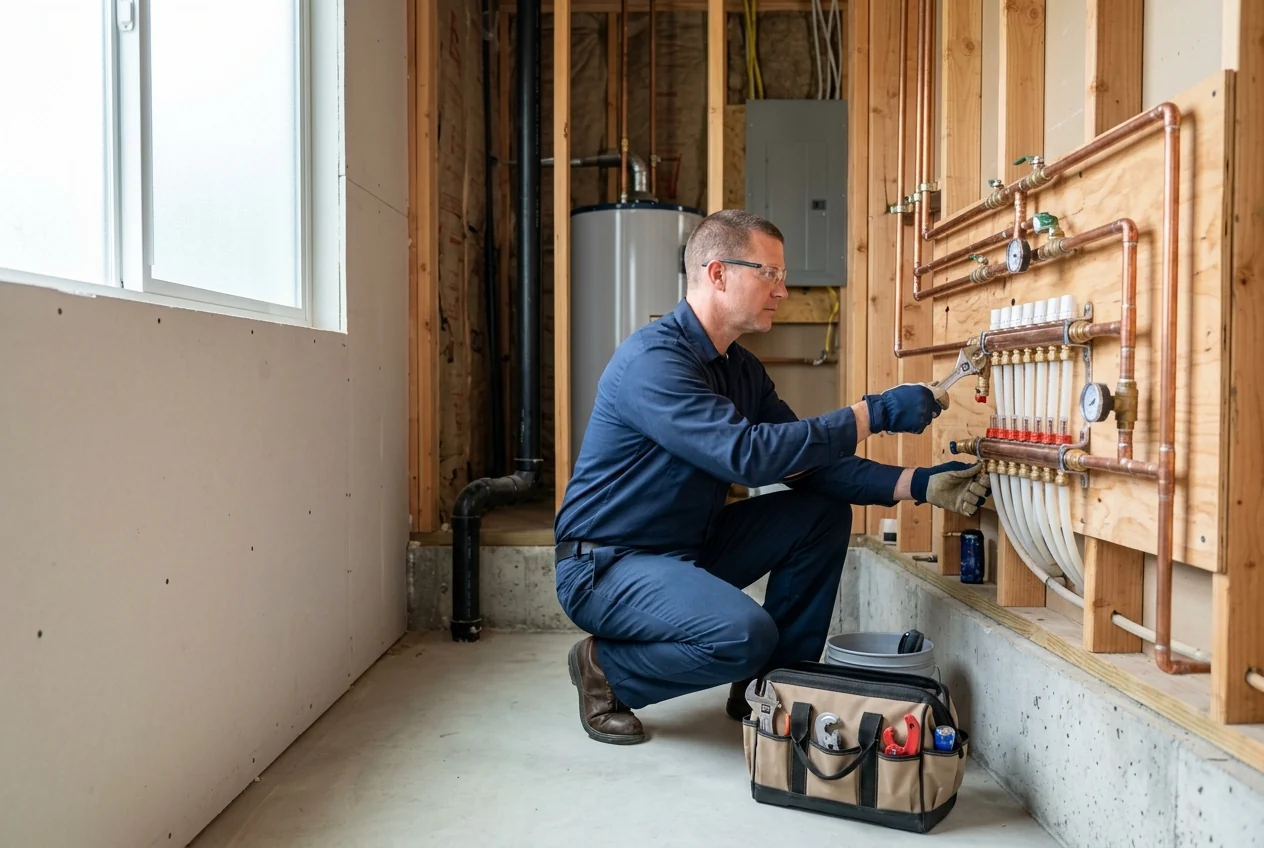
Most plumbing liability claims involve water damage to someone else’s property after a leak, failed connection or backup. General liability with completed-operations coverage may respond to resulting damage, subject to exclusions, deductibles and water-damage limitations, but it usually does not pay to redo your own work. Documentation is the strongest tool you control.
This guide is for San Diego County and California plumbing contractors preparing for a renewal or a first commercial policy. It complements our plumber service page with a practical claims-and-records view.
How water-damage allegations usually arise.
A supply line installed on a Tuesday can fail weeks later behind a finished wall, in a second-floor bathroom or in a multifamily building where several units are affected. The claim often arrives as a subrogation demand from the property owner’s insurer, not as a direct customer complaint.
Underwriters therefore ask where you work and how severe one event could become. A residential service plumber in single-family homes looks different from a contractor repiping occupied condominium buildings or working in commercial kitchens.
Service work and remodel or new construction are different exposures.
Service and repair jobs are frequent, short and usually in occupied homes. Remodel and new-construction work involves larger scopes, general contractor agreements, additional insured requests and longer completed-operations tails. Report the revenue split honestly; a policy rated for service work may contain restrictions that do not fit tract or commercial construction.
Ask whether the proposed policy has water-damage sublimits, higher deductibles for water claims, or exclusions for specific work such as gas lines, fire sprinklers, sewer laterals or work on buildings above a certain height or unit count.
Completed operations: the work you leave behind.
Completed-operations coverage addresses injury or property damage that occurs after your work is finished, subject to the policy terms. Contracts may require it to continue for several years after a project. Confirm the aggregate limit, whether it applies on a per-project basis and how claims-made or occurrence terms affect timing.
Insurance is not a warranty. The cost to replace a defective fitting is typically your business expense; resulting damage to drywall, flooring and contents is the liability question.
What to document on every job.
Dated photographs before and after work, pressure-test results, product and lot information for fittings and water heaters, permits and inspection sign-offs, and a signed work order describing scope are practical evidence. If a homeowner declines a recommended repair, note it in writing.
Keep records for the length of your completed-operations exposure, not just the warranty period. Good records do not guarantee a claim outcome, but they help the insurer evaluate what happened and whether a manufacturer or another trade shares responsibility.
Contracts, additional insureds and indemnity.
General contractors and property managers often require additional insured status, primary and noncontributory wording, a waiver of subrogation and completed-operations coverage for a stated number of years. Each of these is an endorsement question. Send the full insurance exhibit before you sign so we can compare it with what the proposed policy can actually provide.
Broad indemnity clauses can make you responsible for losses you did not fully cause. Insurance may not respond to every promise in a contract. Where a requirement cannot be met, it is better to learn that before mobilizing than after a claim.
Fictional example: one leak, three questions.
A plumber replaces a toilet supply line in a second-floor condo. Two weeks later the line separates and water reaches the unit below. The downstairs owner’s insurer pays and seeks recovery from the plumber. The questions are whether the work caused the separation, whether the plumber’s policy covers resulting damage to the lower unit, and what deductible or water-damage limitation applies.
The plumber’s photographs, the part number and a signed work order help answer the first question. The policy wording answers the second and third. The cost of the new supply line itself is usually a business expense.
Choosing limits and deductibles for water exposure.
A single water loss in a multifamily building can involve several units, flooring, cabinetry, mold remediation and tenants’ relocation costs. When you choose per-occurrence and aggregate limits, think about the largest building you work in rather than the average job. Ask whether an umbrella or excess policy sits above general liability and whether it follows the same water-damage terms.
Some insurers apply a higher deductible to water claims, or require you to pay the first portion of any loss. A higher deductible may lower premium, but it should be an amount your business can pay quickly. Confirm whether defense costs erode the limit or sit outside it, and whether the deductible applies to defense.
Preparing a stronger renewal.
Underwriters respond well to evidence of controls. Describe your pressure-testing routine, how technicians document completed work, which fittings and manufacturers you use, and whether you require shut-off valve checks before leaving a job. If you have had water claims, explain what changed afterward.
Start the renewal 60 to 90 days early if you are adding new construction, multifamily repipes or commercial service. Changes in operations are easier to place when they are disclosed before the effective date instead of discovered at audit or after a loss.
Will my general liability policy pay to replace a leaking fitting I installed?
Usually not. Liability coverage generally addresses resulting damage to others’ property, not the cost of correcting your own work. Read the actual policy wording and any water-damage provisions.
Do I need to tell my insurer about occasional gas or sewer work?
Yes. Disclose all work, including occasional activities. Undisclosed operations can lead to restrictions or disputes after a loss.
What to gather before the review.
Use this list to organize the conversation. We will explain how to share documents securely; do not put identifiers, medical details or financial account numbers in a public web form.
- Revenue split: service and repair, remodel, new construction, commercial
- Building types and the largest multifamily or commercial jobs
- Gas, sewer, backflow, sprinkler or excavation activity
- Five years of loss runs and any water-damage claims
- Sample job documentation and current contract insurance requirements
The takeaway
Water damage is a plumbing business’s defining liability question. Describe your real job mix and keep evidence of your work, and the review becomes far more useful.
Start my contractor review