
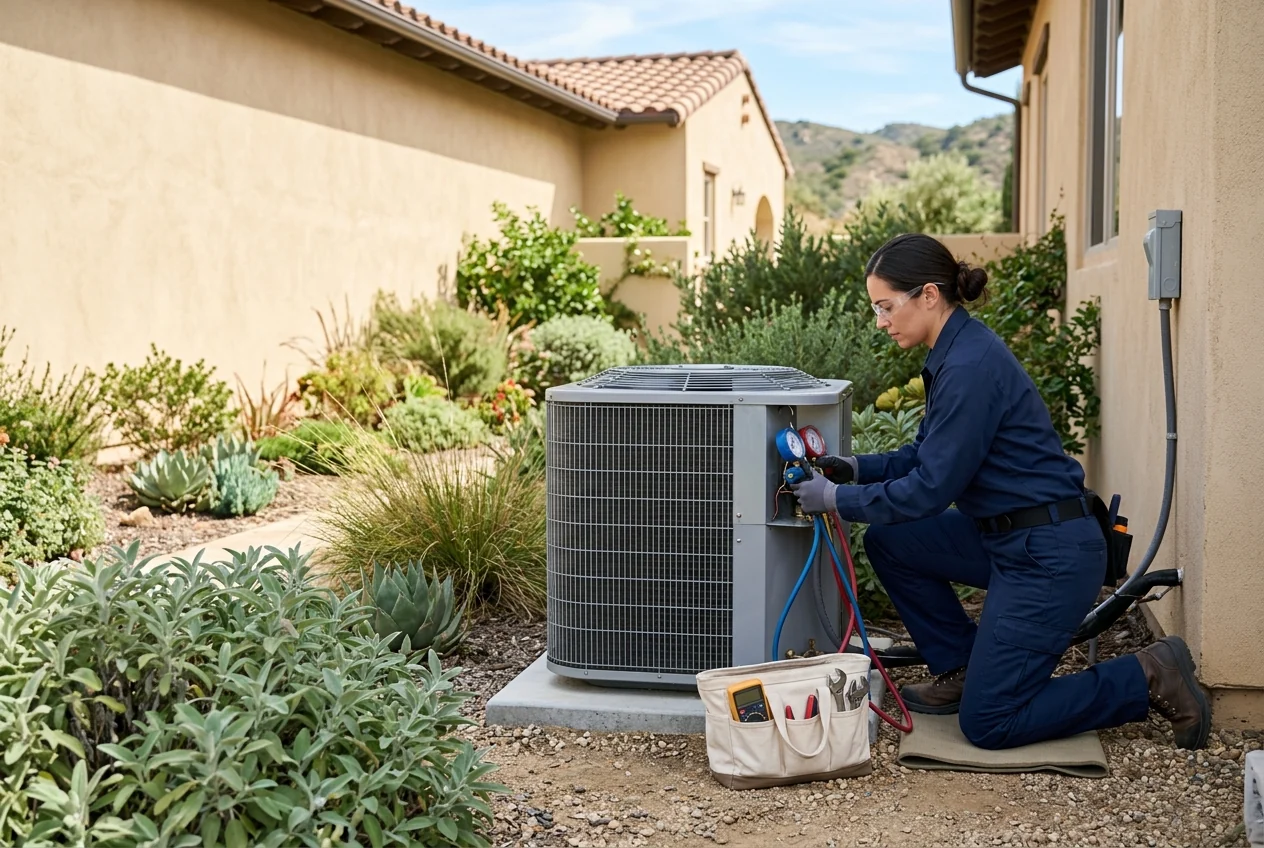
HVAC contractor insurance depends on the split between installation and service, residential versus commercial work, rooftop and crane activity, refrigerant handling and any maintenance contracts with performance promises. Refrigerant releases and design errors are often outside standard general liability.
This guide complements our HVAC service page with the records and questions that make a renewal review more accurate.
Installations and service calls.
New system installations bring completed-operations, condensate-water and electrical connection questions. Service calls are frequent and quick. Report revenue for each and the size of your largest commercial installations.
Heat-pump retrofits may involve electrical panel work; make sure the electrical scope is described and properly licensed.
Rooftops, cranes and height.
Rooftop units involve fall exposure, roof penetrations and sometimes crane lifts. Ask whether crane rigging is your responsibility or the crane company’s, and confirm their coverage and certificates.
Water intrusion through roof curbs is a common allegation; document flashing and sealing work.
Refrigerant handling and pollution provisions.
Standard pollution exclusions may limit coverage for refrigerant releases. Ask whether a limited pollution endorsement or contractor’s pollution liability is appropriate for your operations.
Keep EPA certification and recovery records current; these support both compliance and claim discussions.
Maintenance agreements and performance promises.
Service agreements that promise response times, temperatures for cold storage or energy savings can create contractual and professional exposures that general liability does not address.
Share sample agreements so the review covers what you have actually promised customers.
Service vans, units in transit and tools.
Units waiting to be installed, recovery machines, gauges and tools in service vans need their own coverage. Commercial auto covers the vehicle, not necessarily the equipment inside. Review theft conditions for vans parked overnight.
Clarify when ownership of equipment passes to the customer. A condenser stolen from a job site before startup may be your loss, the general contractor’s or the customer’s depending on the contract.
Fictional example: a condensate line.
A technician installs a new air handler in an attic. The condensate line is not secured, and months later water damages the ceiling and furniture below. The homeowner’s insurer seeks recovery.
The HVAC contractor’s completed-operations coverage may respond to the resulting damage, subject to terms and deductibles. Photos of the installation and a startup checklist help show what was done.
Gas appliances and carbon monoxide.
Furnaces, boilers and water heaters raise combustion and venting questions. Allegations of carbon monoxide exposure after a service call can be serious. Document venting inspections, combustion analysis and any safety warnings you give customers.
If a customer declines a recommended repair, note it in writing. Documentation does not decide coverage but helps evaluate responsibility.
Preparing a stronger renewal.
Share your mix of residential and commercial work, refrigerant certifications, rooftop safety practices, maintenance-agreement templates and driver information. Explain how technicians are trained and supervised.
If you are adding commercial refrigeration, controls programming or design-build work, disclose it before the first project; those operations may need professional or pollution coverage.
Design, load calculations and professional exposure.
When an HVAC contractor sizes systems, performs load calculations or designs ductwork for others to rely on, a client may allege financial loss from an undersized or inefficient system even without injury or property damage. General liability is not designed for those allegations.
If you provide design-build services or energy-efficiency consulting, discuss whether contractor’s professional liability fits your operations.
Is spoiled food in a customer’s walk-in cooler covered if my repair fails?
It depends on the cause, the policy wording and exclusions for your own work and contractual obligations. Disclose refrigeration work and review the terms.
What to gather before the review.
Use this list to organize the conversation. We will explain how to share documents securely; do not put identifiers, medical details or financial account numbers in a public web form.
- Installation vs. service revenue; residential vs. commercial
- Rooftop work, crane use and maximum heights
- Refrigerant volume, certifications and recovery records
- Sample maintenance agreements
- Vehicles, tools, payroll and subcontractors
The takeaway
HVAC risk is a mix of water, electrical, height and refrigerant questions. Disclose each one and the policy can be matched to the work.
Start my contractor review