
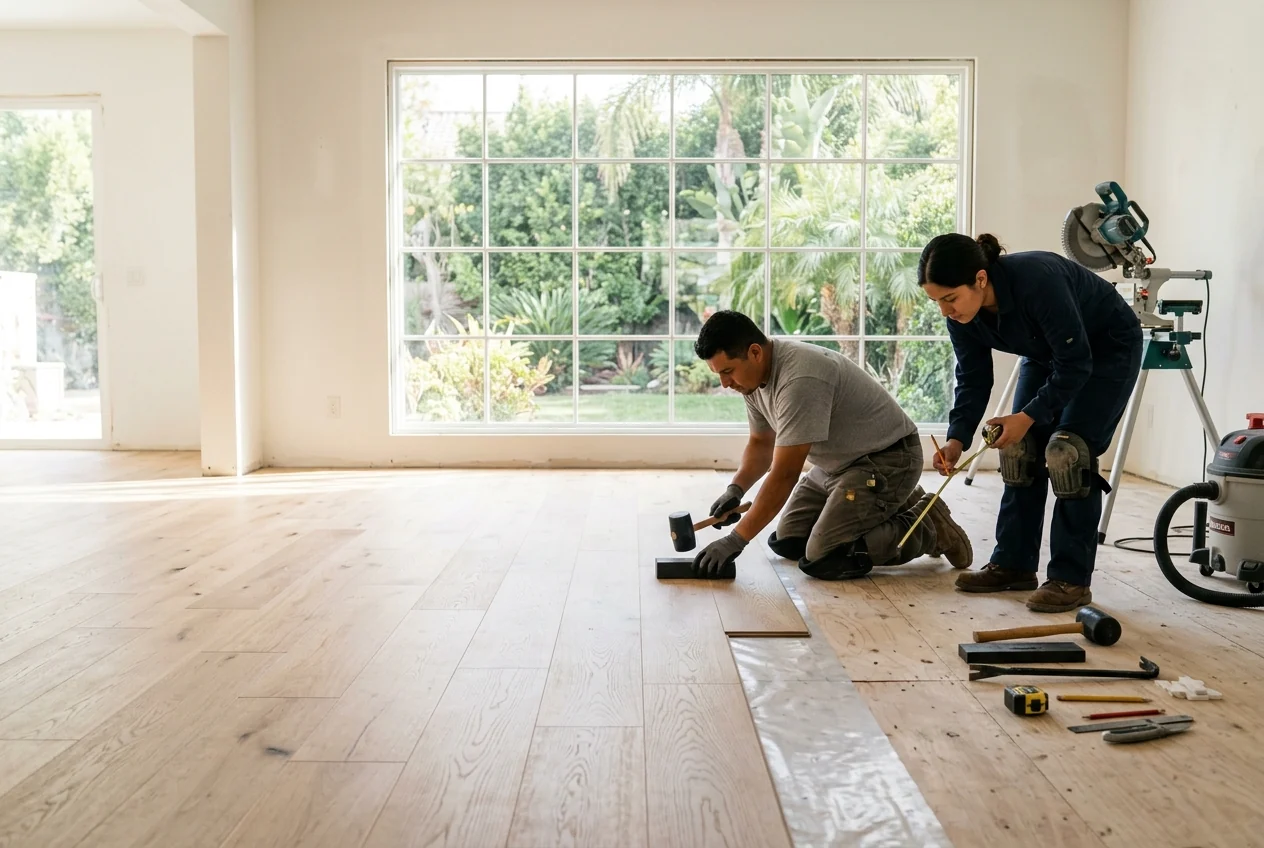
Flooring and tile contractor insurance focuses on resulting damage, completed work, materials in your care and the methods you use: moisture testing, adhesives, sanding, grinding and waterproofing membranes. Liability coverage generally does not pay to redo a floor that was installed incorrectly.
This guide helps hardwood, tile, LVP and carpet installers separate liability questions from warranty questions.
Moisture testing and subfloor responsibility.
Cupping, lifting and cracked tile are often traced to moisture or subfloor conditions. Document moisture tests and who was responsible for the subfloor. Written exclusions in your contract help clarify scope.
Shower pans and waterproofing membranes create water-intrusion exposure after completion; describe this work specifically.
Materials before installation.
High-value flooring stored in your warehouse, truck or at a job site may need inland marine or installation coverage. Clarify when ownership and risk pass to the customer.
Theft from job sites and vehicles is common; review conditions for unattended property.
Refinishing, adhesives and dust.
Sanding, refinishing and coatings raise fire and fume questions. Grinding concrete or removing old flooring may involve silica or asbestos-containing materials, which are often excluded.
Describe dust control and ventilation practices.
Contract language that matters.
Include moisture-testing responsibility, subfloor condition, acclimation time and maintenance instructions in your contracts. Clear scope helps separate a warranty discussion from a liability claim.
Commercial and builder contracts may require additional insured status and completed-operations coverage. Review those requirements before bidding.
Fictional example: a shower pan leak.
A tile installer builds a shower with a waterproofing membrane. A year later, water damages a downstairs ceiling. The question is whether the membrane installation caused the leak.
Photos of the membrane before tile, flood-test results and product information help evaluate the claim. Liability coverage may respond to resulting damage; rebuilding the shower itself is typically a separate cost.
Products you supply.
If you sell and install flooring, you may share product exposure with the manufacturer. Keep product information, batch numbers and installation instructions.
Manufacturer warranties often depend on following installation guidelines; documentation supports both warranty and liability discussions.
Preparing a stronger renewal.
Share your mix of residential and commercial work, material types, waterproofing practices, warehouse values and loss history.
If you have expanded into shower systems, epoxy floors or large commercial projects, disclose them before the work begins.
Commercial flooring and project requirements.
Commercial projects often specify moisture-vapor emission limits, adhesives, slip resistance and testing. They may also require additional insured endorsements, completed-operations coverage for several years and an umbrella. Track these requirements by project.
Slip-and-fall allegations can follow commercial installs if the finished surface is alleged to be too slippery. Keep product specifications and any slip-resistance data supplied by the manufacturer.
Knees, backs and dust: workers’ compensation.
Installers kneel, lift heavy material and work with cutting tools. Knee and back injuries and silica exposure from cutting tile are significant workers’ compensation concerns. Use wet cutting or dust extraction and document training.
Keep payroll by duty, distinguishing installers, warehouse staff and estimators, and collect certificates from subcontracted installers.
Will insurance pay to replace a floor that failed because of my installation?
Generally no. Correcting your own work is a business cost; resulting damage to other property is the liability question. Policy wording controls.
What to gather before the review.
Use this list to organize the conversation. We will explain how to share documents securely; do not put identifiers, medical details or financial account numbers in a public web form.
- Material types and installation vs. refinishing revenue
- Moisture testing and waterproofing practices
- Material storage values and locations
- Removal, grinding and dust-control methods
- Contracts, warranties and loss runs
The takeaway
Separate warranty obligations from liability exposure, document moisture conditions and insure materials before they are installed.
Start my contractor review